


Vitamin B for Nerve Pain
Vitamin B for Nerve Pain
 Adequate levels of B vitamins are essential to support the health and normal function of the nerves in our bodies. Vitamin B is so remarkably important to our nerves that research shows that supplementing with specific B vitamins can help support the healing of nerves if they become injured from trauma or in particular diseases. In particular, vitamins B1, B6, and B12 have been shown not only to support healthy nerve function but also to be essential in their repair in cases of nerve damage.
The chiropractic physicians at Ravenswood Chiropractic in Chicago pay close attention to this research and successfully apply it in their clinical practice as a supportive care for patients who exhibit symptoms of B vitamin deficiencies and for those suffering from nerve pain.
What the B Vitamin Studies for Nerve Pain Say
“Neurotropic B vitamins play crucial roles as coenzymes and beyond in the nervous system. Particularly vitamin B1 (thiamine), B6 (pyridoxine), and B12 (cobalamin) contribute essentially to the maintenance of a healthy nervous system. Their importance is highlighted by many neurological diseases related to deficiencies in one or more of these vitamins, but they can improve certain neurological conditions even without a (proven) deficiency.” [1]
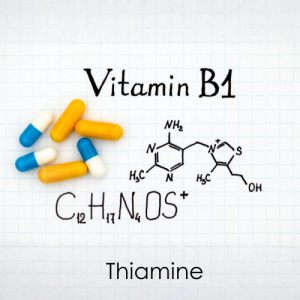 Studies have determined that taking a combination of B1, B6, and B12, for up to 3 months, is an effective method to support the healing of nerves across various neurological conditions [2], including diabetic neuropathy [3] and lumbar radiculopathy [4].
Our chiropractic physicians have seen similar patterns in practice, especially when nutritional status is addressed alongside a targeted plan of care.
This is not surprising because vitamin B12 plays a critical role in nerve conduction. After all, B12 is heavily involved in maintaining the myelin sheath (the fatty cover that insulates your central and peripheral nervous system), which supports proper nerve function.
Vitamin B6 is responsible for the build-up and breakdown of almost all neurotransmitters (chemicals that help nerves send messages).
Thiamine is a critical component of the Krebs cycle, creating adenosine triphosphate (ATP), which powers your brain and nerves. [1]
The research into the effective dosages and treatment duration is significant to those suffering from nerve pain and holds much promise for future benefit.
“Results: Treatment with combination of vitamin B1, B6 and B12 in subjects with symptoms of PN [peripheral neuropathy] showed significant improvement in overall Total Symptom Score (TSS), within 14 days. The treatment also successfully reduced individual components of TSS from baseline to Visit 5. A significant percentage reduction was also observed for all the Visual Analogue Scale (VAS) parameters at the end of 12 weeks, while the Quality of Life (QoL) scores increased from baseline to the end of treatment. Conclusions: The fixed dose combination of vitamin B1, B6 and B12 was effective and well tolerated in subjects with mild to moderate peripheral neuropathy, of various etiologies.” [2]
“In present study, efficacy of combination of vitamin B1, B6 and B12 in the management of diabetic peripheral neuropathy found to be in 87.4% patients. These results are close to the findings of Abbas and Swair where they proved efficacy in 88.9%19.”[3]
“An open controlled study of efficacy of the vitamin B complex (milgamma) has been performed in 38 patients with vertebrogenic lumbosacral radiculopathy suffered from moderate or severe pain during 1 month or longer… The results revealed the potentiation of analgesic effect of diclofenac by the vitamin B complex. Using of milgamma in combination with NSAIDS leads to the rapid and long-standing regress of pain syndrome in patients with lumbosacral radiculopathy.” [4]
Should You Supplement Your Diet With B Vitamins?
 In cases of vitamin B deficiencies it is necessary to consider if there are any dietary factors that may be contributing to this issue. The food you eat can make a dramatic difference in how your body functions, which ultimately affects how you feel. If one is not getting enough B vitamins from their diet, this may also need to be considered as a contributing factor to the manifestation of one’s symptoms, such as pain or fatigue.
Using functional medicine, a nutrition-informed approach for vitamin B deficiencies in patients with nerve pain, our chiropractic physicians help identify potential contributing factors and build a plan to support your body’s healing capacity. While this may be done with supplementing with B vitamins, our providers may also suggest dietary recommendations, or other tools like Class IV Laser Therapy if necessary, to help support the health of you and your body.
It should be noted that ingesting high amounts of vitamin B6 may cause a severe side effect known as sensory neuropathy, if taken in excessive doses for extended periods. Before supplementing B vitamins for nerve pain or maintenance of health, speak with your chiropractic physician or licensed healthcare provider to see if this is right for you.
Consider Class IV Laser Therapy for Nerve Pain
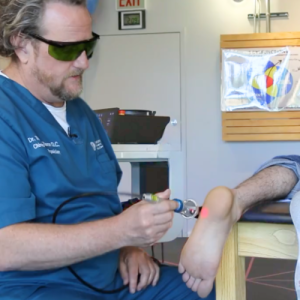 In addition to vitamin B, Class IV laser therapy is a conservative, non-invasive therapy that some clinic use to help manage pain and support tissue recovery. Class IV Laser Therapy is best viewed as one of a couple tools available that may be appropriate depending on the cause of symptoms and the findings on the exam.
At Ravenswood Chiropractic and the Chicago Laser Pain Center in Andersonville, our approach starts with an evaluation to identify likely drivers of nerve irritation, such as mechanical compression, mobility restrictions, local soft-tissue sensitivity, or systemic factors that may influence nerve health. When appropriate, Class IV Laser Therapy may be included as part of a plan designed to:
- Support comfort by helping calm irritated tissues
- Encourage circulation in the targeted area
- Complement Physical Therapy: Mobility, Stabilization, Nerve-Friendly Movement Strategies
- Improve tolerance to daily activity while the underlying issue is addressed
Class IV Laser Therapy is not a replacement for a proper diagnosis or coordinated medical care, especially for conditions like diabetic neuropathy or progressive neurological symptoms. In many cases, the best results come from pairing Class IV Laser Therapy with nutritional support, activity modification, and a progressive movement plan, based on your exam findings and goals.
If you have nerve pain, including symptoms that may be associated with a pinched nerve, sciatica, fibromyalgia, or peripheral neuropathy, call and speak to our team about whether an evaluation is appropriate. Call or Text: 773.878.7330
Common Causes of Nerve-related Pain
Nerve-related symptoms can have different causes. The right plan depends on what your exam suggests is the cause.
- Sciatica | Lumbar Radiculopathy: Leg pain, numbness, tingling
- Pinched Nerve: Neck or back related radiating symptoms
- Peripheral Neuropathy Support: burning or tingling in your hands or feet
- Carpal Tunnel | Median Nerve Irritation: Hand or finger tingling
- Ulnar Nerve Irritation: ring finger or small finger symptoms, elbow sensitivity
- Nerve Pain and Spinal Disc Stress: Mechanical contributors
Local Care in Andersonville
Ravenswood Chiropractic and it’s specialty pain clinic The Chicago Laser Pain Center are located on Ravenswood Avenue in Chicago’s Andersonville neighborhood. Our team works with people from Andersonville, Ravenswood, Edgewater, Uptown, Lincoln Square, and surrounding neighborhoods who want a conservative approach for nerve-related pain.
If you are in Chicago and your symptoms are affecting sleep, work, training, or daily activities, we can help you determine what may be contributing and whether options like Nutrition Support, Class IV Laser Therapy, or Non-surgical Spinal Decompression are appropriate for your situation.
Vitamin B and Nerve Pain FAQ
Do B vitamins help with Nerve Pain?
B vitamins, especially B1, B6, and B12, support normal nerve function. Research suggests that in some cases, including some neuropathies, supplementation may help improve nerve-related symptoms, particularly when a deficiency or increased need is present [1-4].
Which vitamin B is best for Nerve Health?
Studies frequently focus on a combination of B1 (thiamine), B6 (pyroxine), and B12 (cobalmin) because each plays a different role in nerve metabolism, signaling, and support or normal nerve structure [1-4].
Can too much vitamin B6 cause nerve problems?
Yes. High-dose vitamin B6 taken for long periods can contribute to sensory neuropathy in some people. If you are considering supplements, it’s wise to review dose and duration with a licensed healthcare provider. [5-6]
What is Class IV Laser Therapy and how is it used for Nerve Pain?
Class IV Laser Therapy uses a targeted light energy applied to specific areas to support comfort and tissue recovery. In a conservative care plan, it may be used to help reduce sensitivity and improve tolerance to movement while addressing contributing factors found on exam.
How many sessions of Laser Therapy do people usually need?
It depends on the cause, how long the symptoms have been present, and how your body responds. Some people notice changes within a few visits, while others need a longer plan, especially if symptoms are longstanding or related to complex factors.
References
1. Calderón‐Ospina, Carlos Alberto, and Mauricio Orlando Nava‐Mesa. “B Vitamins in the Nervous System: Current Knowledge of the Biochemical Modes of Action and Synergies of Thiamine, Pyridoxine, and Cobalamin.” CNS Neuroscience & Therapeutics, vol. 26, no. 1, 2019, pp. 5–13., doi:10.1111/cns.13207.
2. Hakim, M, et al. “Management of peripheral neuropathy symptoms with a fixed dose combination of high dose vitamin: B1, B6, B12,: a 12 weeks prospective non interventional study.” Asian Journal of Medical Sciences, vol. 9, no. 1, pp. 32-40.
3. Rizvi, A., Ahmad, A., Rizvi, Z. “Efficacy of Combination of Vitamin B1, B6 and B12 in Management of Diabetic Peripheral Neuropathy.” PJMHS, vol. 7, no. 3, pp.801-804.
4. O. S. Levin and I.A. Moseikin. “Vitamin B Complex (Milgamma) in the Treatment of Vertebrogenic Lumbosacral Radiculopathy.” Zh Nevrol Psikhiatr Im S S Korsakova, vol 109, no. 10, pp. 30-35., PMID: 20037567
5. M.B. Katan. “How Much Vitamin B6 Is Toxic.” Ned Tijdschr Geneeskd, vol 149, no. 46, pp. 2545 -2546. PMID: 16320662
6. Vrolijik, M., et al. “The vitamin B6 paradox: Supplementation with high concentrations of pyridoxine leads to decreased vitamin B6 function.” Toxicology in vitro, vol. 44, pp. 206-212

Dr. DeFabio D.C. is a highly regarded chiropractor in Chicago who focuses on helping his patients achieve optimal health and wellness. He takes a holistic approach to care, treating symptoms and addressing underlying issues to promote long-term healing. Dr. DeFabio D.C. is passionate about empowering his patients to take control of their health and live their best lives. You can find him surfing, skateboarding, and volunteering at the Lakeview Food Pantry when he’s not in the office.


