


TMJD Home Care Tips
How to Take Care of TMJD at Home
What’s the Cause of Your Temporomandibular Joint Disorder (TMJD) ?
Why an evaluation matters before home care begins
 TMJD can come from several different sources such as jaw muscle overload, joint irritation, bite or clenching habits, neck and upper back mechanics, posture, airway and sleep factors, stress patterns, or a combination of these. Because the “right” home treatment depends on the cause, it’s important before beginning any form of home treatment, especially exercises, that you don’t guess. Home care methods will vary based on the origin of your TMJD, but more importantly, you can worsen your symptoms by using the wrong at-home method.
For example, if your TMJD is due to muscle tightness, then a warm compress is recommended. But if the cause is inflammation, a warm compress will worsen your symptoms.
If you’re in Chicago, our team at Ravenswood Chiropractic and the Chicago Laser Pain Center in Andersonville can help you determine what’s contributing to your symptoms and build a plan that matches your presentation by getting a TMJD evaluation in Andersonville.
Click here to learn more about conservative care options for TMJD.
In-Office options we may consider for TMJD
For some cases, especially when symptoms are lingering, more intense, or repeatedly flaring, your exam findings may indicate that you may benefit from in-office support alongside homecare. Two non-invasive options we commonly discuss are:
Class IV Laser Therapy for TMJD
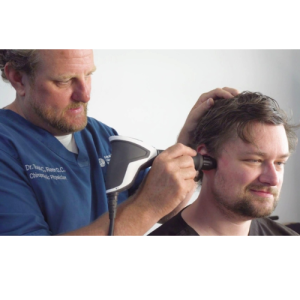 Used to support comfort and recovery in irritated or overworked tissues by assisting the body’s natural healing response. Many patients like that it is gentle and can be paired with mobility and posture strategies.
Shockwave Therapy for TMJD
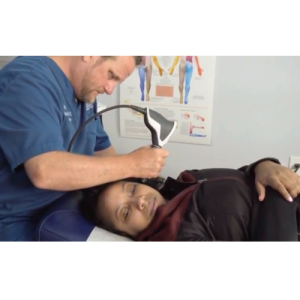 Often used when tissues are stubborn, tight, or chronically overloaded, particularly when the jaw, neck, or surrounding muscles have become guarded or sensitized over time.
Your exam helps determine if these are a fit and where to apply them (jaw musculature, cervical region, upper back or postural contributors ect.).
TMJD Care at Home
Once you have had an exam and know the cause, our patients can find the ideal at-home treatment from the list below.
Warm Compress: If your TMJD is due to muscle tightness, then apply warm compresses to the area. For the first week, use a warm compress up to once per hour for 5 to 10 minutes. For the second week, apply a compress up to three times per day.
Ice Pack: Use an ice pack when inflammation is the cause of your TMJD. For the first week, apply ice to the area up to once per hour for 5 to 10 minutes. For the second week, use an ice pack up to three times per day.
Rest Your Jaw: Common actions we take for granted can contribute to TMJD pain such as talking and chewing. Try to reduce the movement in your jaw as much as you can throughout the day.
Eat Soft Foods: One easy way to give your jaw a break is to focus on soft foods.
• Protein: Eggs, yogurt, tuna
• Carbohydrates: Cooked vegetables, quinoa, and mashed potatoes
• Fats: Coconut oil, avocado
Supplement: For muscle spasms and TMJD pain, the following supplements may help:
• Magnesium
• Quercetin
• Myocalm
• Inflavanoid
We carry pharmaceutical-based versions of these supplements at our office. You can also purchase these over-the-counter at a nearby health food store.
Posture: Your body is like a chain-linked fence. If you have tightness or an issue in one area of your body, it will affect other areas. Proper posture can help keep your musculoskeletal structure in alignment, reducing pressure and tightness in the area of your jaw.
Stress Reduction: The source of TMJD is often unforeseen and comes in the form of daily stress. Maybe you have a chaotic work schedule, or you’ve recently suffered a loss. Stress is the most common cause of TMJD, but there are effective and natural ways to deal with it:
• Muscle relaxation
• Light Excercise
Read about how you can reduce your stress in five minutes or less.
Meditation: Continuing with the point above, mindfulness meditation has been shown to decrease pain sensations associated with TMJD. If you are beginning with meditation, start with five minutes per day, and work your way towards 20 minutes.
• Sit on a cushion or chair with an erect spine and relaxed shoulders.
• Focus on your breathing as you take slow deep belly breaths in through your nose.
• Slowly exhale out through your mouth or nose.
• Concentrate only on the feeling of your breathing.
• When you get distracted, gently bring yourself back to your breath.
Visualization Techniques: You can also try a visualization exercise that focuses on the relaxation of your jaw and surrounding muscles. Follow these simple instructions:
• Sit with a tall spine, relaxed shoulders, and focus on your breathing.
• Take slow deep belly breaths in through your nose and out through your mouth.
• After several slow belly breaths try closing your mouth while pressing your tongue firmly on the roof of your mouth for about 3 seconds and relax.
• Tighten your jaw muscles for 3 seconds then relax.
• Scrunch your face up like you just ate a lemon then relax.
• Lastly, lift shoulders to ears hold 3 seconds then relax.
• Sit for three min and focus on belly breathing.
Ask for Help: There is always an underlying cause to TMJD. 50% to 70% of people who experience TMJD experienced a stressful event in the preceding six months. To get to the source of your TMJD, you may need to ask for some help for a short time. This is where cognitive behavioral therapy comes in.
It might seem like an odd recommendation, but studies have shown there is a correlation between negative thought patterns, anxiety, tension, and the pain that comes from TMJD.
You can talk with us about your TMJD, and if we believe you will benefit from therapy, we will refer you to a specialist. You can also ask about providers we work with, and we can help you find a perfect match.
Don’t Do This When You Have TMJD
Now that we’ve looked at things you can do to help your TMJD let’s explore the things you should avoid.
Don’t Chew Hard Things: Don’t eat tough foods such as candy, chips, nuts, and seeds. Also, make sure you avoid nervous habit chewing fingernails, pens, ice, and gum.
Don’t Sleep on the Wrong Side: Make sure you avoid sleeping on the side where you are experiencing the pain from TMJD.
Take Care of Your Neck: Don’t do things that can aggravate neck strain and pain such as cradling a phone between ear and shoulder. Read more about neck pain.
Don’t Use Your Teeth Incorrectly: It’s tempting to break open things with your teeth, but they are not a tool. If you use them in this way, you can make your TMJD worse.
Don’t Exercise Vigorously: Yes, exercise can help your TMJD condition, but not at high intensities. During high impact and high-intensity exercise, we tend to clench our jaws and extend our chins.
Don’t Delay: If you are not getting treatment for neck pain, headaches, or other conditions frequently contributing to your TMJD, don’t delay! Get evaluated by a qualified healthcare provider such as a chiropractic physician.
Exercises for TMJD
IMPORTANT: Don’t start TMJD exercises without knowing the cause
The exercises below can be helpful after an evaluation confirms what is causing your TMJD. If your symptoms are coming from joint irritation, disc issues, cervical mechanics, or protective muscle guarding, the wrong exercise sequence can increase clenching, clicking, or soreness.
It’s time to get evaluated if:
- Your TMJD is moderate to severe, or interfering with your day (eating, talking, sleep, concentration)
- Your TMJD symptoms last more than a couple days, keep returning, or are trending worse.
If you are in Chicago, we can evaluate this in person at Ravenswood Chiropractic and our Chicago Laser Pain Center in Andersonville and if appropriate, combine home care with Class IV Laser Therapy or Shockwave Therapy to support your plan.
Post-Isometric Relaxation: A very helpful technique to release tension in the muscles surrounding your jaw. While it is generally safe, you should discuss PIR with your doctor if you have an infection, tumor, skin lesion, or if you haven’t determined the cause of your TMJD.
Active Muscle Release: Helps to restore proper movement patterns in connective tissue and muscle groups. While it is generally safe, you should discuss this with your doctor if you have an infection, tumor, skin lesion, or if you haven’t determined the cause of your TMJD.
Suboccipital Stretch: Focusing on the muscles in the back of your neck, this stretch can alleviate tightness that contributes to TMJD pain.
Cervical Anchor Stretch: Utilizing a towel, this is another type of neck stretch that targets the muscles in the side of the neck, providing relief from TMJD tension and pain.
Cervical Retractions: This is an exercise to help strengthen neck muscles while ensuring proper alignment. This will decrease the strain and pain you feel from TMJD.
Supine Pectoralis Stretch: As mentioned above, your body is like a chain-linked fence. You don’t want to focus on just the area where the pain is occurring; you’ll want to target surrounding muscle and connective tissue as well. This stretch helps to loosen up a tight chest and front shoulder muscles, which will help your neck and jaw.
Wall Angels: An exercise to help with stopping overcompensation in the front shoulders while strengthening the back-shoulder muscles. This correction will improve your posture and alleviate tightness.
CALL TODAY FOR YOUR CUSTOMIZED TREATMENT PLAN
Local Care in Andersonville
If you are searching for TMJ support near Andersonville, Ravenswood, Uptown, Edgewater, or Lincoln Square our clinic at Ravenswood and Foster Ave offers evaluations focused on identifying the cause of TMJD and building a practical plan you can follow at home and in office. When clinically appropriate, we may incorporate Class IV Laser Therapy or Shockwave Therapy to support discomfort and recovery as you work on your posture, mobility, and jaw mechanics.
For a customized treatment plan including at home care instructions schedule an appointment for your TMJD Pain Today by calling us at 773.878.7330. In Office and TeleHealth appointments are available for TMJ Pain.
Frequently Asked Questions About TMJD
When should I see a doctor about my TMJD?
If your symptoms are moderate to severe, interfere with your day (eating, talking, sleep, focus), or last more than a couple days, it’s time for an evaluation. Ongoing or recurring TMJD often has contributing factors (jaw mechanics, neck posture, clenching habits, stress patterns, etc.) that are easiest to address when identified early.
What are common causes of TMJD?
TMJD is often multi-factoral. Common contributors include jaw muscle overload, joint irritation, posture and neck mechanics, stress-related tension patterns, sleep-related clenching, and sometimes dental related factors. An evaluation helps determine what’s most relevant in your case.
What can I do at home now, while I’m deciding what to do next?
In general: keep it simple and low risk:
- Rest your jaw: Avoid gum, chewy foods, wide yawning.
- Soft foods: for a short period if chewing is painful
- Focus on relaxed posture: Avoid forward head and chin jutting.
If symptoms are persistent, escalating, or limiting normal activities, schedule an evaluation.
Is it possible that neck posture or upper back tension affect TMJD?
Yes, jaw function is closely connected to the neck and upper back. Forward head posture, prolonged screen time, and upper back stiffness can increase strain on the jaw and surrounding muscles. Many plans include addressing posture and cervical mechanics alongside jaw-specific strategies.
What is Class IV Laser Therapy and how is it used for TMJD?
Class IV Laser Therapy is a non-invasive option we may use to support comfort and the body’s natural healing response in irritated or overworked tissues. In TMJD care, it may be applied to involved jaw muscles and or related regions often in the upper back and neck based on exam findings. Results vary and it is typically paired with a home care plan.
What is Shockwave Therapy and when might it be considered for TMJD?
Shockwave Therapy or Radial Pressure Wave Therapy is a non-invasive approach that is sometimes used when tissues are tight or chronically overloaded. In TMJD-related cases, it is commonly considered when muscle tension and trigger-point patterns are persistent or when symptoms recur despite basic home care and is always guided by exam findings and tolerance.
My jaw clicks but I do not have pain, do I have a TMJ problem?
Not always. Some clicking can be painless and stable. But if clicking is new, getting worse, accompanied by pain, locking, or limited opening, or changes in bite or chewing comfort, it is a good reason to get evaluated.
Can stress make TMJD worse?
Yes. Stress can increase jaw tension, clenching and muscle guarding. Many people benefit from combining physical strategies for posture, mobility, jaw mechanics with stress reduction tools like breathing, relaxation and sleep support.
I’m in Chicago, can you evaluate TMJ Pain at your clinic?
Yes, if you are in Chicago or the surrounding area, you can schedule an evaluation at Ravenswood Chiropractic and the Chicago Laser Pain Center. If appropriate, we can combine a personalized home plan with in office options like Class IV Laser Therapy or Shockwave Therapy to support your progress.

Dr. DeFabio D.C. is a highly regarded chiropractor in Chicago who focuses on helping his patients achieve optimal health and wellness. He takes a holistic approach to care, treating symptoms and addressing underlying issues to promote long-term healing. Dr. DeFabio D.C. is passionate about empowering his patients to take control of their health and live their best lives. You can find him surfing, skateboarding, and volunteering at the Lakeview Food Pantry when he’s not in the office.


