

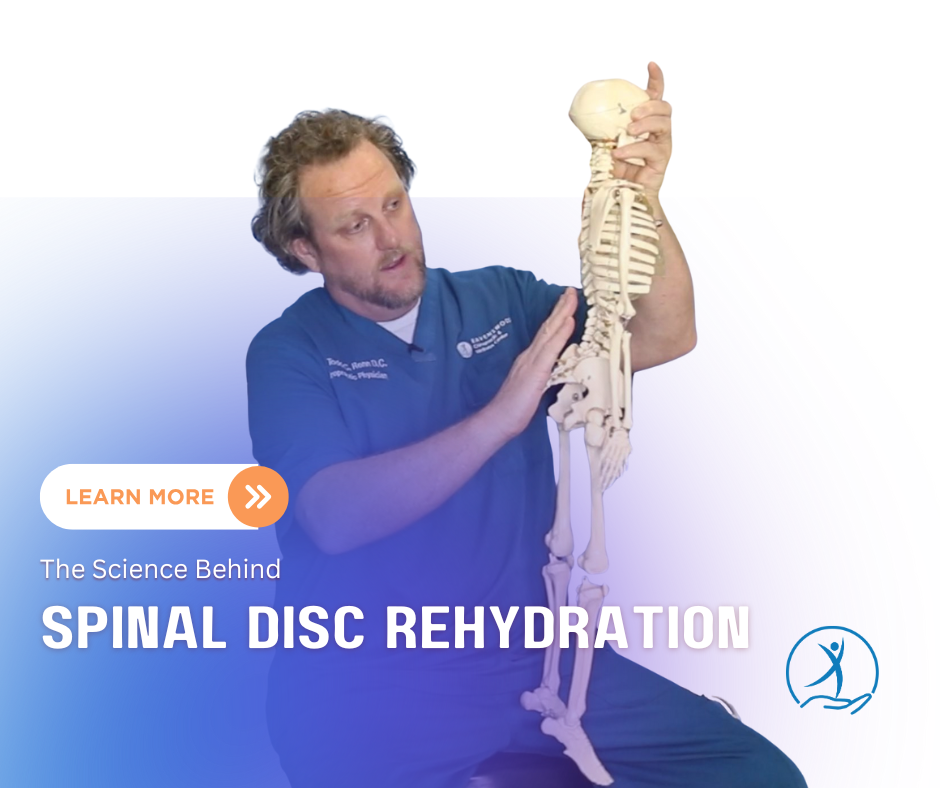
The Science Behind Spinal Disc Rehydration
Curiosity Meets Regeneration
Most people have heard that spinal discs can ‘dry out‘ or lose flexibility over time but that’s not the full story. The real question isn’t why discs lose water; it’s how they can get it back. At RennWellness, we look at discs as living, dynamic tissues capable of self-repair. Rehydration isn’t wishful thinking it’s biophysics, biochemistry, and regenerative cellular signaling working in harmony.
Let’s explore the science of spinal disc rehydration: how mechanical decompression, cellular metabolism, and laser energy help discs regain their structure, hydration, and strength.
The Anatomy of a Hydrated Disc
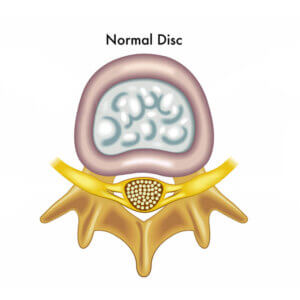 Each intervertebral disc is composed of two parts: the nucleus pulposus and the annulus fibrosus.
The nucleus, rich in proteoglycans and glycosaminoglycans, attracts water through osmotic pressure, which maintains the disc’s height and resilience.
The annulus, built from concentric collagen fibers, contains the internal pressure.
Together, they create a hydraulic cushion that absorbs load and distributes motion across the spine. When hydrated, discs can be 86% water by volume. This hydration is vital it enables nutrient diffusion, metabolic exchange, and normal biomechanics of the spine.
Dr. Renn’s Take:
Think of your spinal discs as living sponges. They don’t soak up water passively they regulate it through chemistry. Every movement you make changes the pressure inside the disc, and that pressure drives fluid in and out to keep the tissue alive.
Why Discs Lose Hydration
Discs don’t simply dehydrate with age they respond to stress, chemistry, and mechanical load. Inflammatory cytokines and enzymatic factors can degrade proteoglycans, thereby lowering osmotic potential. Reduced motion or chronic compression can restrict diffusion through the cartilage endplates (between the disc and the vertebrae), impairing the supply of glucose and oxygen needed for cell metabolism.
These are dynamic processes meaning they can be influenced, slowed, or even reversed with the right environment for healing.
Dr. Renn’s Take:
Loss of hydration isn’t destiny it’s biology responding to its environment. When we restore motion, pressure balance, and cell energy, discs often rehydrate naturally.
The Biomechanics of Rehydration
 Fluid movement in and out of the disc depends on changes in pressure.
During spinal unloading like when lying down or undergoing decompression the internal disc pressure drops, allowing water and nutrients to flow inward through osmotic gradients.
When the spine is loaded again, metabolic waste is expelled. This cyclical loading and unloading acts as a biological pump that maintains disc health.
Controlled decompression therapy enhances this process by temporarily lowering intradiscal pressure, restoring diffusion potential, and supporting rehydration at a cellular level.
Dr. Renn’s Take:
Your spine is a living hydraulic system. Every breath, every stretch, every moment of decompression affects how fluid moves through your discs. When that system is balanced, discs can restore their internal environment.
Cellular Regeneration and Photobiomodulation
Class IV Laser Therapy enhances cellular metabolism through photobiomodulation. When light photons at therapeutic wavelengths are absorbed within mitochondria, ATP production increases fueling biosynthesis of proteoglycans and collagen. This process restores the disc’s matrix composition, improving its water-binding capacity and structural integrity.
Photobiomodulation also reduces pro-inflammatory cytokines (TNF-α, IL-1β) and promotes TGFβ synthesis, which supports matrix remodeling and anti-inflammatory repair pathways. These cellular shifts collectively help re-establish osmotic pressure, allowing discs to regain water content and resilience.
Dr. Renn’s Take:
Class IV Laser Therapy doesn’t just reduce pain, it can energize the cells responsible for rebuilding the disc. By improving mitochondrial function, we give these cells the energy to repair their own structural proteins and retain more water.
MRI and Clinical Evidence of Rehydration
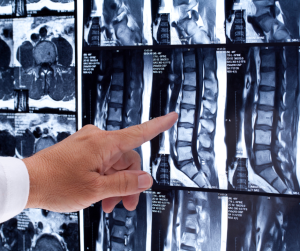 Some interesting research using MRI imaging provides objective evidence of rehydration. Increased T2 signal intensity within treated discs corresponds to improved water content and biochemical recovery. Studies have also shown measurable increases in disc height following decompression and laser protocols consistent with restoration of osmotic balance and proteoglycan density.
These findings align with clinical outcomes: many patients report improved mobility, reduced stiffness, and long-term reduction in pain intensity.
Dr. Renn’s Take:
We can actually see hydration changes on MRI. The brighter signal means the disc has regained fluid and metabolic activity it’s one of the clearest signs that real regeneration is taking place.
Why Rehydration Matters Beyond Pain Relief
Disc rehydration restores more than just comfort it restores function. Hydrated discs absorb shock more efficiently, reduce uneven load on adjacent levels, and support long-term spinal mobility. They improve nutrient transport and slow degenerative processes across the motion segment.
In essence, disc rehydration means the tissue has regained its ability to participate in the body’s self-maintenance systems.
The Future of Disc Health: Regeneration, Not Replacement
The future of spinal care lies in regeneration, not replacement. With the growing body of research on photobiomodulation, decompression, and cellular signaling, we are entering an era where we can influence disc biology in real time. This understanding transforms how we view chronic spine conditions from inevitable decline to dynamic, recoverable systems.
At RennWellness, our focus remains on applying these scientific principles through non-surgical, evidence-based care that respects the body’s innate capacity to heal.
References
- NCBI Study 15845216. Laser irradiation modulates intradiscal protein chemistry and reduces inflammatory mediators influencing nerve sensitivity.
- Urban, J. P., & Roberts, S. (2003). Degeneration of the intervertebral disc. Arthritis Research & Therapy, 5(3), 120–130.
- Ferraresi, C., Hamblin, M. R., & Parizotto, N. A. (2012). Low-level laser (light) therapy increases mitochondrial membrane potential and ATP synthesis in C2C12 myotubes. Photochemistry and Photobiology, 88(2), 334-339.
- Rola, P., Szot, K., & Knapik, A. (2022). Changes in cell biology under the influence of low-level laser therapy (LLLT) or photobiomodulation (PBM). Photonics, 9(7), 502.
- Apfel, C. C., et al. (2010). MRI findings demonstrating disc rehydration after non-surgical decompression therapy.

Dr. Todd Renn D.C. has been a chiropractic physician for over 20 years. He is dedicated to helping his patients achieve optimal health through non-invasive chiropractic techniques. Dr. Renn D.C. is passionate about educating his patients and empowering them to take a proactive approach to their health. He is highly respected in the chiropractic community and committed to providing safe and effective evidence-based patient care. Dr. Renn D.C. enjoys staying active with his family and enjoying outdoor activities in his free time.


