

Nerve Flossing Exercises in Chicago – Andersonville | Ravenswood Chiropractic
‘Nerve flossing,’ what’s that?
At Ravenswood Chiropractic and our specialty clinic Chicago Laser Pain Center in Andersonville, our chiropractic physicians use a variety of conservative, evidence-informed physical medicine approaches to help reduce pain, restore movement, and get you back to the activities you care about. Often many of the conditions our providers treat include injuries to nerves, joints, or muscles. For our patients experiencing certain types of nerve injuries, our providers may incorporate specific neurodynamic techniques, colloquially known as ‘nerve flossing’ exercises, as part of their treatment.
Nerve flossing is designed to gently glide an irritated or mechanically sensitive nerve through the surrounding tissue, like helping a stuck cable move more smoothly.
The goal is to gently:
- Reduce sensitivity
- improve tolerance to movement
- Support better function
Important: Because symptoms like numbness, tingling, burning pain, or weakness can have multiple causes, nerve flossing should be done only after an evaluation to confirm what is being irritated and to ensure the technique is appropriate and safe for you.
When might nerve flossing be helpful?
Nerve flossing is used for cases of radiculopathy, a condition associated with irritation of a nerve that results in pain in an extremity (either an arm or leg – like in sciatica). These exercises are designed to gently glide the nerve around the area in which it is being irritated, offering it more room to move. In turn, the exercises decrease the amount of pressure being placed on an injured nerve, ultimately helping to reduce pain and increase nerve function.
A classic example of the benefits of incorporating nerve flossing exercises with treatment is in cases of ‘pinched’ nerves in the neck or low back. Furthermore, nerves may become irritated or ‘pinched’ at the spine, but this may occur anywhere they travel through an arm or leg. For example, research supports treating some instances of carpal tunnel syndrome with neurodynamic maneuvers. Nerve flossing is a useful adjunct treatment for pinched nerves, but research suggests that patients with fibromyalgia respond well to neurodynamic techniques as well.
Common conditions where nerve flossing may be considered after an examination
- Cervical radiculopathy: Neck-related arm pain, tingling, or numbness
- Lumbar radiculopathy: Sciatica, Back-related leg pain, tingling, or numbness
- Carpal tunnel syndrome: Median nerve irritation at the wrist (select cases)
- Ulnar nerve irritation: after certain strains, posture-related irritation, or repetitive over-use (case-dependent)
Nerve flossing can be a useful adjunct (not a stand-alone treatment) when the exam suggests the nerve is mechanically sensitive and when symptoms can be reproduced and improved with controlled movement.
Why we don’t recommend “just trying it” from the internet
While there is current and exciting research regarding the benefits of nerve flossing, it is essential that a physician or manual therapist first evaluate you before beginning these techniques. Without the guidance of a licensed provider, a patient may unknowingly put excessive strain on an already irritated nerve, thereby worsening symptoms and causing more pain.
If you have progressive weakness, significant loss of coordination, new bowel or bladder changes, saddle numbness, severe unrelenting pain, fever, unexplained weight loss, or symptoms after a major trauma, please seek urgent medical evaluation.
How Nerve Flossing fits into our multi-modality physical therapy approach
In our Andersonville Chicago clinic, nerve flossing is typically introduced as part of a broader multi-modality physical therapy and rehab program which may include:
- Movement and posture coaching
- Targeted mobility work that doesn’t flare symptoms
- Progressive strengthening and stabilization
- Manual therapy
- Home-care guidance and pacing strategies
For some patients, we may also recommend in-office therapies to support comfort and improve tissue tolerance so you can progress your rehab plan more effectively.
Shockwave Therapy – In-office
 In cases where irritation may be influenced by scar tissue, myofascial restriction, or adhesions along the nerve’s pathway (including around tissues near the spine), shockwave therapy may help support tissue mobility and comfort in some patients. This can be particularly relevant when:
- Symptoms have become chronic or recurring
- There’s a history of repetitive strain, prior injury, or “stuck” tissues
- Your exam findings suggest a mechanical component beyond simple inflammation
Class IV Laser Therapy – In-office
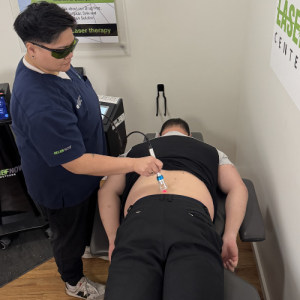 Class IV Laser therapy may be used to support circulation, reduce pain sensitivity, and promote a healthier healing environment in irritated tissues. When nerve-related symptoms are present, laser therapy may be considered as part of care intended to:
- Improve tolerance to movement
- Calm highly sensitive tissues
- Support recovery in areas with fibrotic or restricted soft tissue (case-dependent)
Class IV Laser Therapy and Shockwave Therapy are typically not replacements for our Physical Therapy program. We may use them to help you move better sooner, so your home program, including nerve flossing when appropriate, is easier to perform and more sustainable.
Local Care in Andersonville
If you are experiencing neck, back, arm, or leg symptoms, including numbness, or pain that travels, our team at Ravenswood Chiropractic and Chicago Laser Pain Center can help you determine whether nerve flossing is appropriate and how it should be performed. Please call or text us for a free consultation or appointment at 773.878.7330.
Nerve Flossing FAQ
What is nerve flossing?
Nerve flossing (neurodynamic “glides”) is a gentle movement sequence intended to help an irritated nerve move more freely through surrounding tissues and reduce sensitivity during motion.
Can nerve flossing help sciatica?
It may help certain cases of sciatica-like symptoms when an exam suggests the sciatic nerve is mechanically sensitive. It’s not appropriate for every cause of leg pain, which is why an evaluation matters.
Is nerve flossing just stretching?
Not exactly. A stretch typically lengthens tissue and holds it. Nerve flossing uses controlled motion to “glide” the nerve, usually without holding end-range positions.
How often should I do nerve flossing?
That depends on irritability and diagnosis. Many people do best with short sets, low intensity, and gradual progression, only as directed by your provider.
Can I do nerve flossing at home?
Yes, only after you’ve been prescribed and shown the correct technique and dosage for your condition. Doing the wrong variation or too much can aggravate symptoms.
How do Class IV Laser Therapy and Shockwave Therapy fit into care?
They are in-office modalities we may use as part of a wider Physical Therapy plan to support comfort and tissue mobility so you can better tolerate physical therapy better.
References:
https://pubmed.ncbi.nlm.nih.gov/30664500/ [cervical radiculopathy]
https://pubmed.ncbi.nlm.nih.gov/29307812/ [carpal tunnel syndrome]
https://pubmed.ncbi.nlm.nih.gov/28395984/ [carpal tunnel syndrome]
https://pubmed.ncbi.nlm.nih.gov/26143052/ [fibromyalgia]

Dr. DeFabio D.C. is a highly regarded chiropractor in Chicago who focuses on helping his patients achieve optimal health and wellness. He takes a holistic approach to care, treating symptoms and addressing underlying issues to promote long-term healing. Dr. DeFabio D.C. is passionate about empowering his patients to take control of their health and live their best lives. You can find him surfing, skateboarding, and volunteering at the Lakeview Food Pantry when he’s not in the office.


