

Meditation for Pain: What Does the Science Say?
Mindfulness Meditation for Chronic Pain: What Does the Science Say?
 The practice of meditation has been around for thousands of years, but it’s only within the last few decades that it has exploded in popularity. Meditation has become a normal daily practice for stress management and overall wellness. What’s more, recent studies are suggesting that it might also play an important role in how some people experience and cope with pain, especially when used as part of a broader plan.
Chronic pain is common in the U.S. with CDC data (2021-2023) estimating 20-25% or 1 in 5 adults live with chronic pain, and a smaller subset (7-8.5%) have “high-impact” chronic pain that limits life or work activities. It’s no wonder that mindfulness meditation has become a “mainstream” health trend in the U.S. over the past two decades.
Let’s take a look at what recent studies say about the effectiveness of meditation for pain. We’ll also breakdown simple steps you can take to start meditating today.
Note: Pain can have many causes. Meditation can be supportive, but it is not a substitute for a clinical evaluation, especially if pain is severe, worsening, or accompanies by symptoms like numbness, weakness, unexplained weight loss, fever, bowel or bladder changes, or night pain that is escalating.
Research on Meditation for Pain
 Due to the opioid epidemic, doctors and patients alike are searching for drug-free and all-natural ways to alleviate pain. One review of 38 studies wanted to see how meditation would measure up for pain. Researchers graded each study based on outcomes of pain, depression, quality of life, and analgesic use. Meditation was found in all studies to be effective for pain. Some studies showed it was great for alleviating depression as well. It should be noted that the researchers found the results promising but suggested more in-depth studies.
With the pain-alleviating benefits of meditation becoming more obvious, researchers weren’t sure how meditation was able to reduce pain. Some speculated that meditation was activating opioid receptors. But one study found that meditation significantly reduced pain, and it had nothing to do with opioid mechanisms in the body.
One very unique find is the difference that meditation has on short-term and long-term meditators. One study found that those who are new to meditation will experience the greatest pain reduction benefits. But what’s really interesting is that long-term meditators experience a shift in pain awareness. Researchers believe that although the subjects didn’t experience a higher level of pain reduction, their pain did not bother them because they did not assign a meaning to the pain.
How to Meditate in 5 Simple Steps
 Convinced and ready to get started with meditation? Start small and set a timer for 5 minutes. Here are several simple steps to begin meditating:
- Sit up in a comfortable position on the floor or in a chair. You can also lie down if you’re experiencing pain.
- Take three deep breaths in through your nose and exhale through your mouth.
- Close your eyes.
- Focus on your breath going into your stomach as you breathe in and out through your nose.
- Count the breaths up to 10, then begin again at 1. Do this until the timer runs out.
Resources for Meditation
If you’re having trouble with starting your meditation journey, there are a few apps and videos that can help:
Calm, Headspace, and Insight Timer: These are the most popular meditation apps available for download. They have guided meditations for pain management.
YouTube: There are dozens of videos on guided meditation for pain. You can try this one or this one.
When Mindfulness Meditation Isn’t Enough
Meditation can be a powerful tool, but it’s not always sufficient by itself, especially when pain is persistent, recurrent, or limiting your daily life.
If you feel like you’ve “tried everything” it may help to re-frame the goal:
- Meditation can help downshift the nervous system and reduce the stress amplification of pain like a “volume” knob.
- A Clinical Plan can help address the underlying causes or the “signal”, such as joint irritation, muscle guarding, movement intolerance, nerve sensitivity, or tissue overload.
Many people we see assume the only next steps are “just live with it”, strong medications, injections, or surgery. In reality, there are often conservative options worth discussing with a qualified healthcare provider.
A Newer Option We Use In-Office: Class IV Laser Therapy
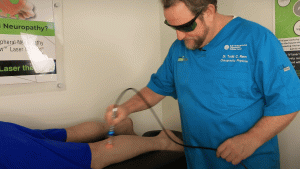 One technology that has advanced significantly in recent years is Class IV Laser Therapy or photobiomodulation. The goal isn’t to “mask” pain, it’s to influence pain processing while also supporting tissue-level physiology, as appropriate for your case.
How Class IV Laser Therapy may help with pain signals
Research on photobiomodulation describes several pathways relevant to pain modulation, including effects on peripheral nerve sensitivity and inflammatory signalling, though outcomes depend heavily on dosage parameters and the condition being treated.
How Class IV Laser Therapy may support tissue health
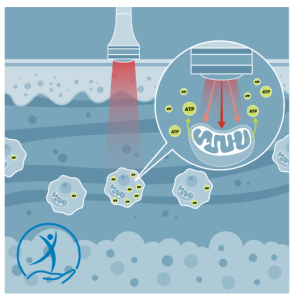 Mechanistic research suggests photobiomodulation can influence mitochondrial activity, which may support cellular energy (ATP), nitric oxide signalling, oxidative stress balance, and cytokine regulation, factors commonly discussed in tissue recovery and inflammation physiology.
What the clinical research says about Class IV Laser Therapy
Systemic reviews on high-intensity laser therapy for musculoskeletal conditions report pain-related improvements in some studies, but also highlight variability in study quality, protocols, and comparison treatments.
“It can be a useful tool for some people, when used with the right diagnosis and dosing, and combined with a broader plan” – Dr Renn, D.C.
What Does Class IV Laser Therapy Look Like In Our Office?
 Laser Therapy is typically part of a multi-modality plan that may also include, non-surgical decompression, shockwave therapy, or physical therapy aimed at improving function not just symptoms.
Mindfulness Meditation and a Pain Management Program in Andersonville, Chicago
Daily Meditation, even if it’s only 10 minutes per day, can be one part of a bigger plan for pain management. If you are dealing with persistent pain and want a conservative, patient-centered approach, we can help you map out options.
At Ravenswood Chiropractic and our specialty clinic the Chicago Laser Pain Center in Andersonville, our clinical team builds individualized plans that can include Class IV Laser Therapy and Physical Therapy.
If you are in Chicago and want to know what is driving your pain, and what non-drug, non-surgical options may be appropriate, call or text us at 773.878.7330 to schedule an evaluation.
FAQ
Does meditation “treat” pain?
Meditation may help some people reduce pain intensity and/or improve how manageable pain feels. Results vary, and it works best as part of a broader plan.
Can Class IV Laser Therapy help pain?
Some research on high-intensity laser therapy or photobiomodulation suggests benefit for certain musculoskeletal pain conditions, though study quality and protocols vary.
How does Laser Therapy work?
Photobiomodulation research describes effects on cellular energy processes (mitochondria and ATP), nitric oxide signaling, and inflammatory mediators that may relate to pain and recovery.
Where can I get Class IV Laser Therapy in Andersonville, Chicago?
Ravenswood Chiropractic and Chicago Laser Pain Center offers Class IV Laser Therapy on Ravenswood Ave in the Andersonville Neighborhood.
References
- Zeidan F, Vago DR. Mindfulness meditation-based pain relief: a mechanistic account. Ann N Y Acad Sci. 2016;1373(1):114–127. doi:10.1111/nyas.13153.
- Hilton L, Hempel S, Ewing BA, et al. Mindfulness Meditation for Chronic Pain: Systematic Review and Meta-analysis. Ann Behav Med. 2017;51(2):199–213. doi:10.1007/s12160-016-9844-2.
- Zeidan F, Adler-Neal AL, Wells RE, Stagnaro E, May LM, Eisenach JC, McHaffie JG, Coghill RC. Mindfulness-Meditation-Based Pain Relief Is Not Mediated by Endogenous Opioids. J Neurosci. 2016 Mar 16;36(11):3391-7. doi: 10.1523/JNEUROSCI.4328-15.2016.

Dr. DeFabio D.C. is a highly regarded chiropractor in Chicago who focuses on helping his patients achieve optimal health and wellness. He takes a holistic approach to care, treating symptoms and addressing underlying issues to promote long-term healing. Dr. DeFabio D.C. is passionate about empowering his patients to take control of their health and live their best lives. You can find him surfing, skateboarding, and volunteering at the Lakeview Food Pantry when he’s not in the office.


